This is cafe/gallery is well worth hunting down, even if you are not into the art on display, which at the time of our visit was mostly black and while photography, the cafe part is amazing.
Medicine New Street Birmingham
The Medicine Bakery is very well hidden but in plain site on New Street in Birmingham. The entrance is just a doorway next to a new Poppeyes restaurant, could easily be a doctor’s office or a fancy chemist.
The only clue if you know what you are looking for is the word Medicine above the door. There is no on street menu, just a wooden door leading to some steps. At the top of the steps is a counter with an amazing assortment of pasties, muffins, cakes etc etc.
Just past this counter and turn right at the coffee bar and you are warmly welcomed, if there is space or if you have made a reservation you are shown to your table.
Medicine Dining Room New Street Birmingham
As you can see even on a dim day the place is light and airy, with art adorning the walls and a fine collection of plants. The seats are not fancy, but comfortable, the table functional but the cakes and coffee are a welcome find in a street of convenience and fast food.
This space opened around 2017 and in 2021 they expanded with another location in the Mailbox Birmingham just outside Harvey Nichols and then again in 2023 with a location within Selfridges in the Bullring, these are all within easy reach of the canal.
A few days ago we completed the Tardebigge Lock Flight towards Birmingham through the now restored Top Lock 58, which had been closed for restoration since 17th February 2025.
The lock look beautiful, at the moment the cleanest canal lock we have ever been through, you can see all the new and old blue bricks on the left and the new blue bricks on the right.
Inside the restored Tardebigge Top Lock number 58
In the picture below, you can see the new bricks with one of the makers marks showing Ketley for Ketley Brick Company Ltd.
Ketley Blue Bricks
There is not much to see up top as the CRT team have left everything very tidy. We are very pleased to see the flight open as with other drought closures it has seriously curtailed our travels this year.
Note: Interestingly there are signs on the lock gates asking boater to leave the locks empty after use.
This I have to admit doesn’t sound a bundle of laughs, but it was interesting, fascinating and our guide made it fun. Just a short walk from the canals this is a place that will surprise you.
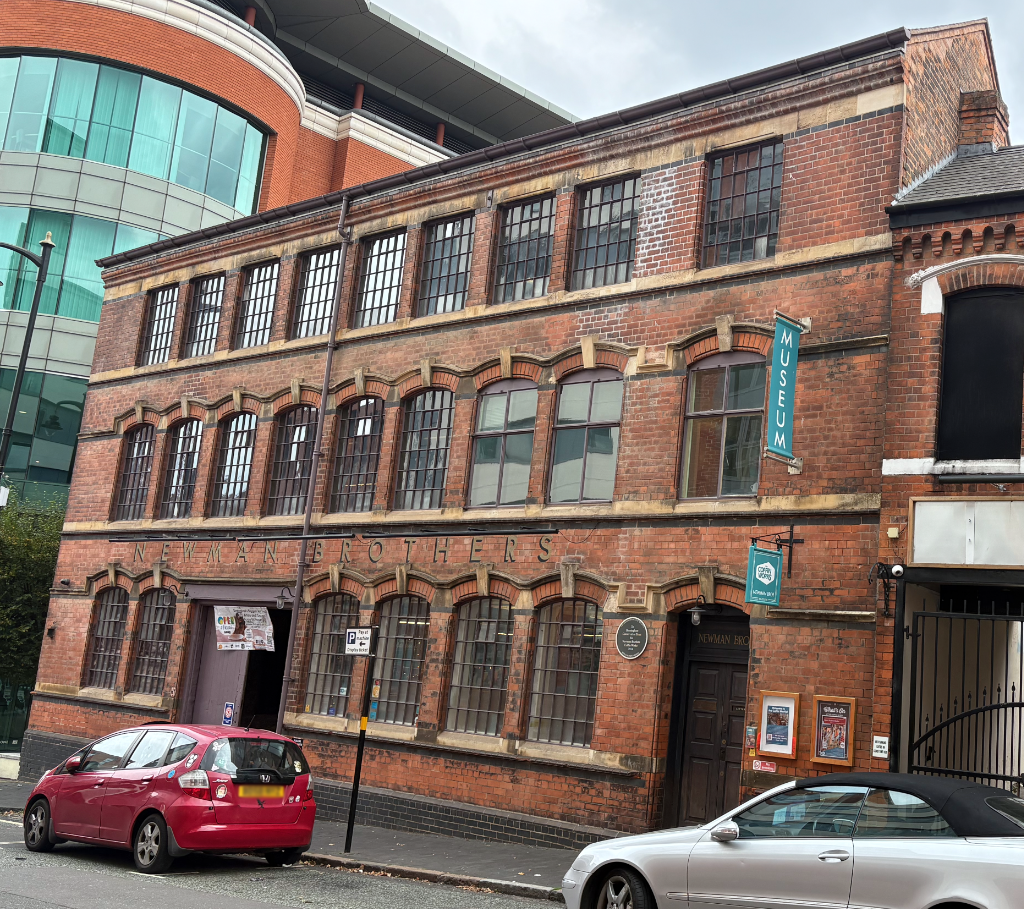
Coffin Museum – Birmingham
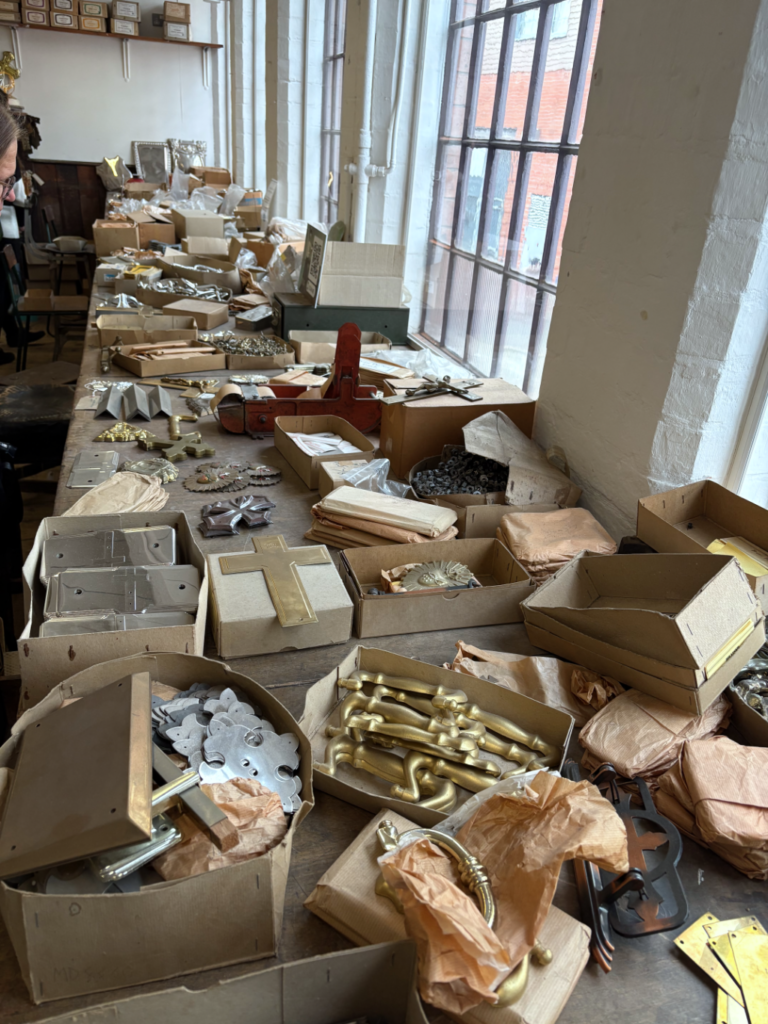
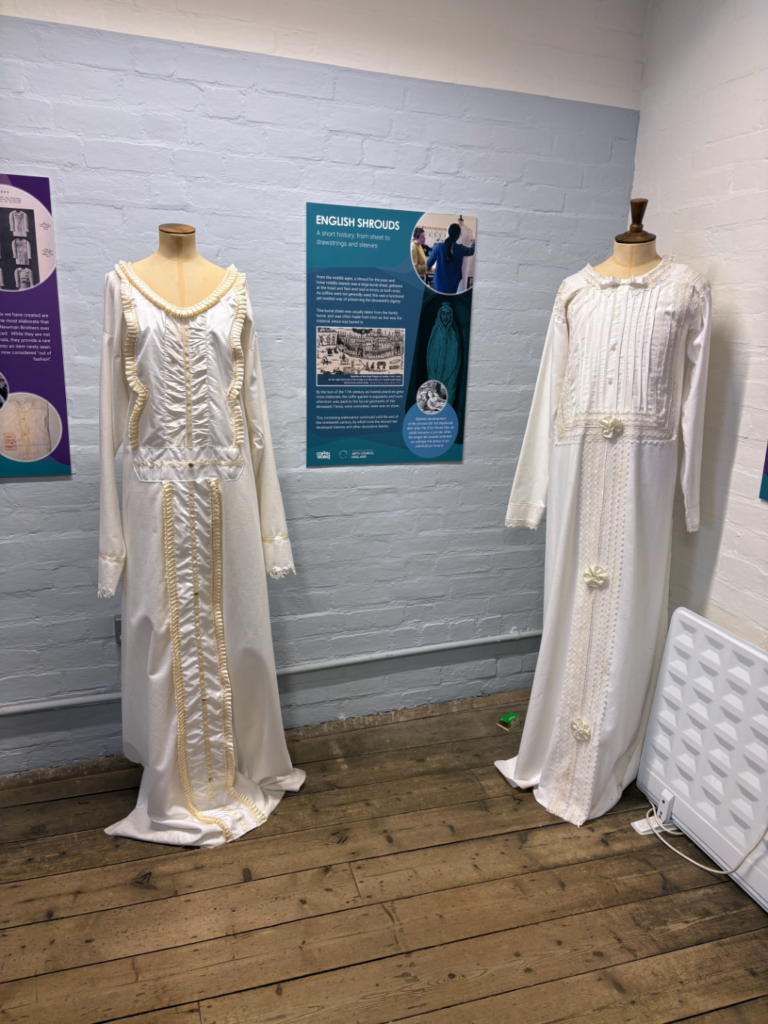
Just so you know, they do not make coffins here, that was done by the funeral directors, but they did supply all the coffin furniture from the fancy metal work that adorned the coffin to the linings and shrouds to be worn by the dead.
The business was called Newnam Brothers and was originally built in 1894 to manufacture draw handles. This evolved in to Coffin furniture as this was a potential booming business is Victorian times.
The guided tour we took made this industry come alive, with stories of the people who worked at and created this business from people on the factory floor to the traveling sales people and the directors and eventual owner.
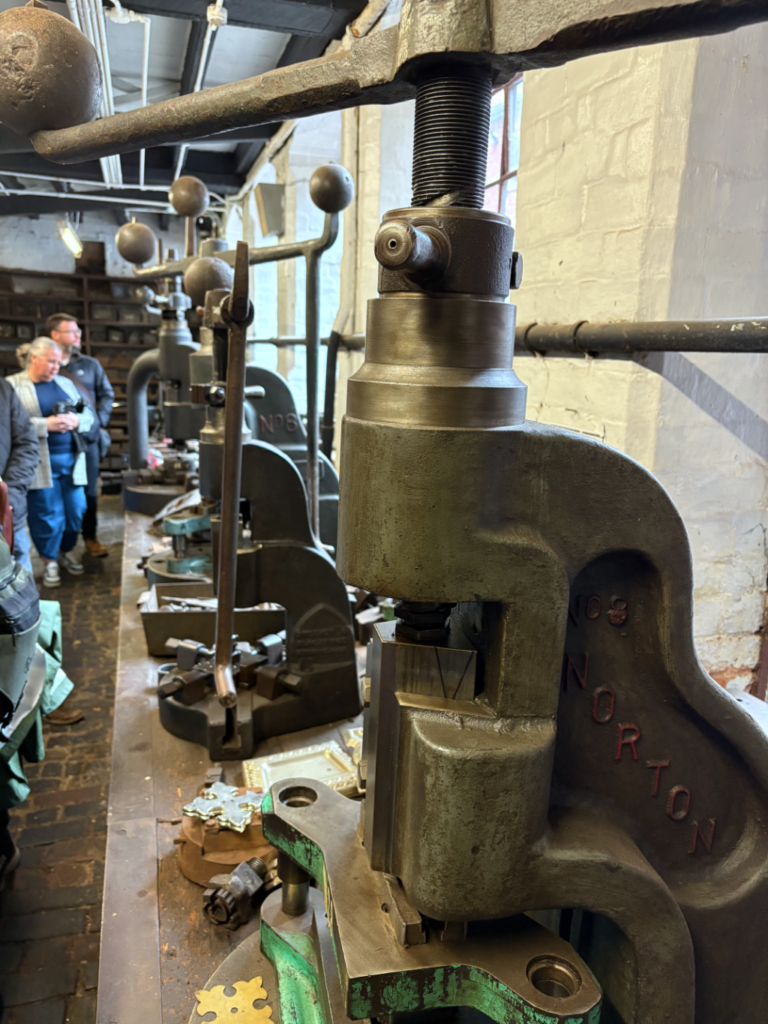
We learned the processes involved, with demonstrations and examples, from pressing and casting to barrel tumbling and finishing, the museum feels like the workers have just finished for the day and we are looking around before they return.
Strangely, the business ran for almost 100 years closing in 1998 as changes in the funeral traditions took its toll. Burial being more and more replaced with cremation, and the UK government banning metal coffin furniture for cremations.
The last owned and managing director of the firm, Joyce Green, sold he business when she retired on the understanding the factory would be made into the museum it is today.
Coffin Works Stock Coffin Works CourtyardCoffin Works Fly PressCoffin Works Sewing MachinesCoffin Works ShroudsCoffin Works Tour Guide Heather
We recommend you make a booking, even late in the season our tour was full.
We already have a 3000W Sterling Pro Combi S inverter which was installed by Black Prince Boats when we purchased our Ex-Hire canal boat in 2021. Luckily for us Sterling Power Products are based in the UK and in Droitwich very near our Marina. They also have their Sales/Support and Stock on-site, very useful when you need to get a problem solved PDQ.
So after chatting to Ben at Sterling Power, he advised us what we needed and we placed an order online. The next day I went to collect our new goodies and have a further chat to Ben.
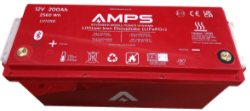
The Sterling is not the cheapest, I could easy find some low cost alternative products, but I was looking for a well know and reliable product that would be useable 24-7 & 365 days of the year, especially when the boat moored in a frozen canal in the middle of winter. The Sterling batteries include all the normal BMS (Battery Management System) stuff including a bluetooth connection to my phone, but I was also advised by Ben that these batteries also have an inbuilt 100W heater that is controlled by the BMS so that when the temperature is below 0°C it will divert any charging power to heating the battery first so it can be safely charged without damaging the battery.
Click for Explanation – LiFePO4 batteries and the COLD
LiFePO4 (Lithium Iron Phosphate) batteries should not be charged below 0°C (32°F) because lithium plating can occur, causing permanent damage, capacity loss, and increased safety risks such as internal short circuits. This chemical process, where metallic lithium accumulates on the anode, reduces the battery’s lifespan and can lead to dangerous failures.
Once back at the boat and with the excellent help of Steve Cowham from STC Marine Engineering, who is also based at Droitwich we started to talk through what we needed to do. The only sure thing was this was the first time either of us had done this before, but we had access to support from Ben at Sterling Power Products, available at the end of the phone.
A bit of a sudden panic on my part, as I had assumed this would all fit in the available space in the battery tray, something I should have checked first…. Luckily it all physically fitted.
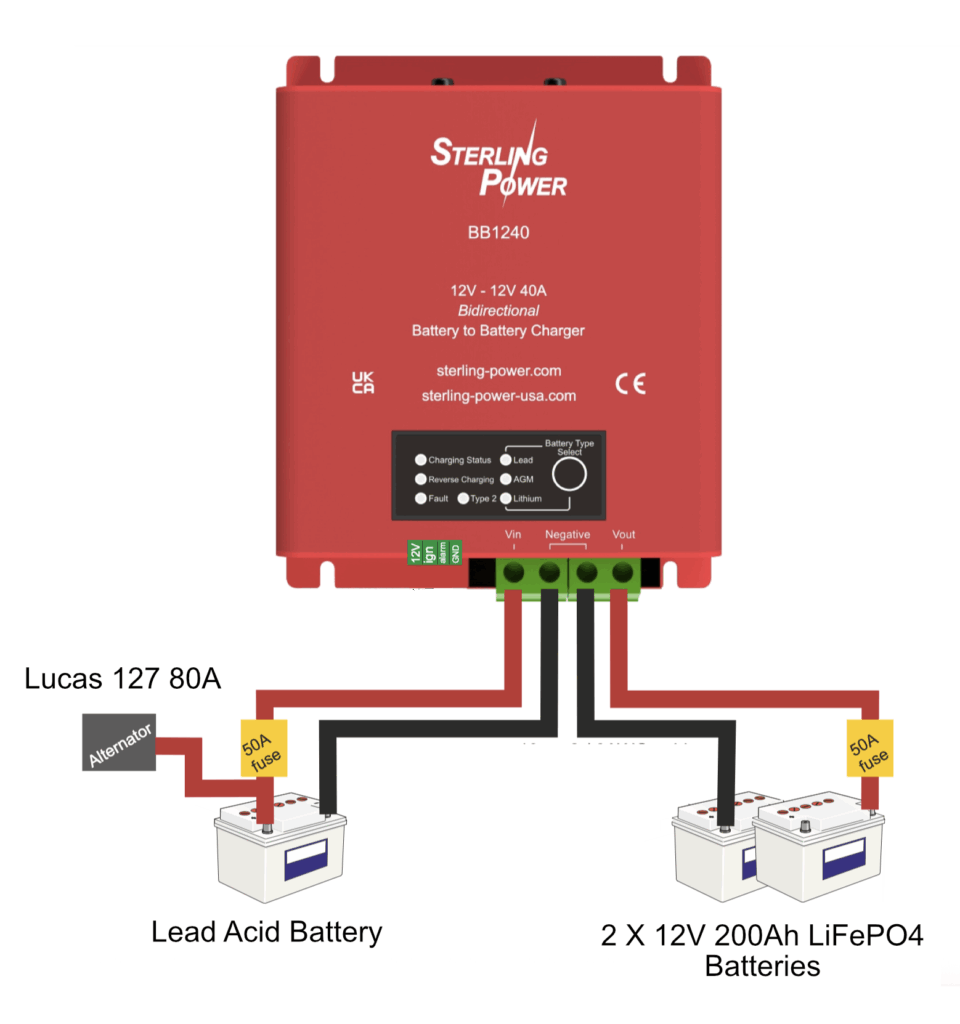
Our plan was to have a hybrid battery systems retaining one of the old leisure lead acid batteries to act as a buffer between the Lucas 75 Alternator and the new fancy LifePO4 batteries, as Alternators and LiFePO4 batteries do not play well.
Click for Explanation – LiFePO4 Batteries and Alternators – WHY not a good idea
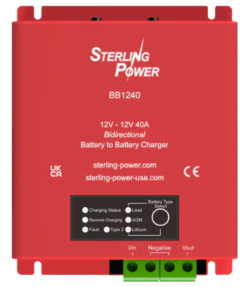
The use of the Sterling Power BB1240 between a lead-acid and a LiFePO4 battery is to provide the correct, multi-stage charging profile for the LiFePO4 battery, as it has different charging voltage and current requirements than the lead-acid battery.
A simple direct connection to the alternator would cause damage to the alternator. LiFePO4 batteries have low internal resistance and can draw a massive amount of current from the alternator, potentially overheating and then failing. The alternator is not typically designed to operate at full output continuously.
So, out with three old and tired lead acid batteries. We then put the LiFePO4 batteries sandwiched between the remaining lead acid buffer battery and the engine starter battery, which has its own alternator and is not effected by this upgrade.
While Steve was manhandling the batteries I was despatched to our local chandlery at Hanbury Wharf to get some longer M8 bolts as those supplied are a little short if you are connecting a few things to the terminals.
A question we asked Ben at Sterling was, “Where do we attach the solar charger, should this be on the lead acid buffer battery or on the LiFePo4 battery?” He came back with, “Direct to the LiFePO4 batteries as this does not need to pass through the Battery to Battery Charger”.
We have used most of the original cables to install these batteries. Unfortunately our cables would not let us connect the inverter directly to the LiFePO4 batteries, this was a problem as any power would not come from the LiFePO4 bank as while the Saturn BB1240 Battery to Battery Charger was bidirectional, it only charges the buffer battery when the LiFePO4 batteries are fully charged.
So for today we were as far as we could go. I later plugged us into the shore line power and, while not totally unexpected, the inverter kicked in and started charging the LiFePO4 bank via the Saturn BB1240 Battery to Battery Charger. I do not think I have heard the fan on the inverter run so fast, a few hours later we had charged the new batteries to 100%.
Now to connect the inverter directly to the new batteries we needed some extra longer 50mm2 cables, we also added a new isolation switch as we would now effectively need to be able to isolate the buffer battery from the Alternator. Another trip to Hanbury Wharf Chandlery and I had another isolator, luckily we have a ready made location for this next to the battery bank.
Steve had a very useful hydraulic crimp press and we trawled the Hanbury Wharf Chandlery collection of crimps as we adapted the cables we had to the correct sizes for the old lead acid batteries which had 10mm posts and the new LiFePO4 batteries that use 8mm and our fuse boxes that use 6mm
Steve also made a new cable for the Alternator as we expect to upgrade this later, and it only had a 10mm2 cable, as an over kill and as we had the cable to hand this was replaced with a 25mm2 which should give us enough capacity for future upgrades.
We added 50A fuses on the positive cable on the input and output cables from the Saturn BB1240 Battery to Battery Charger.
Now we have everything in working order, I will replace some of the old cables we used with some new ones of the optimal length and maybe add a couple of bus bars to make the wiring simpler, but that will be after our return from our September travels.
Note: I will include a simple wiring diagram in the next few days, once we are above the Tardebigge Lock Flight and I am moored in Birmingham.
I have been complaining that our fridge does not get as cold as expected, but this year we have not had time for a real boat holiday and have been using the boat for short weekend trips with family or as a stopover for other longer trips, so I put the fridge temperature down to being switched off and on for just a short time.
But the fridge may have been an indicator of bigger problems, we are currently on a longer trip. We have not gone far yet, but we did try to use our new Monsieur Cuisine smart cooking gadget and it tripped out our 3000W Sterling Pro Combi S inverter, odd but I did not worry. This gadget has a larger very powerful motor and a cooking heater, so I suspected it sent something ugly on to the 240V circuit (I know I am old but stuff like this used to happen a lot in our family home,).
So we are out for the first week and decide to put on some washing, we don’t leave our inverter on all the time, so I switched it on and them we loaded and started the washing machine. Within a minute it had also tripped the inverter, we were a few days from passing our home base mooring on the way to Birmingham, so we stopped and moored up by the Droitwich Canal turning and I called Sterling to see if they had any advice.
Sterlings Tech support was quick and insightful. He recommended checking the voltage on the big terminals at the bottom of the inverter, alas it was only 11.4V way too low and the inverter had been switching it self off.
After that call I did a few simple tests. I started the engine and started to charge the batteries. The starter battery was very happy at over 14 volts, but the house batteries started to charge but remained lower that I expected at just sub 14 volts and with the engine switched off the voltage was starting to drop quite quickly.
Our house battery bank is approx 400 Ah made up of 4 X 100 Ah lead acid batteries, plus a separate starter battery with its own alternator. These batteries came with the boat are were probably installed late 2020 or early 2021 by Black Prince, so this is getting near the 4-5 year expected life for lead acid batteries.
The next call was then back to Sterling to see what advice they would give me on what I should fit to replace my batteries with something a little more modern.
They recommended two AMPS LH12200 (12V 200Ah LiFePO4) and a Sterling BB1240 (DC to DC 40A Bidirectional Battery to Battery Charger). We would then retain one of the original 12V lead acid batteries to act as a buffer and then connect the Battery to Battery charger between that and the new LiFePO4 batteries.
Original Image stolen from Stirling Power and modified
This was then ordered on their website for next day collection, luckily they are based in Driotwich, and we have access to our car so we can go and collect.
Next we will document the install and configuration, and maybe some performance figures if we can work any out, but I am looking forward to a greater useable capacity than the 50% we got with the lead acid.