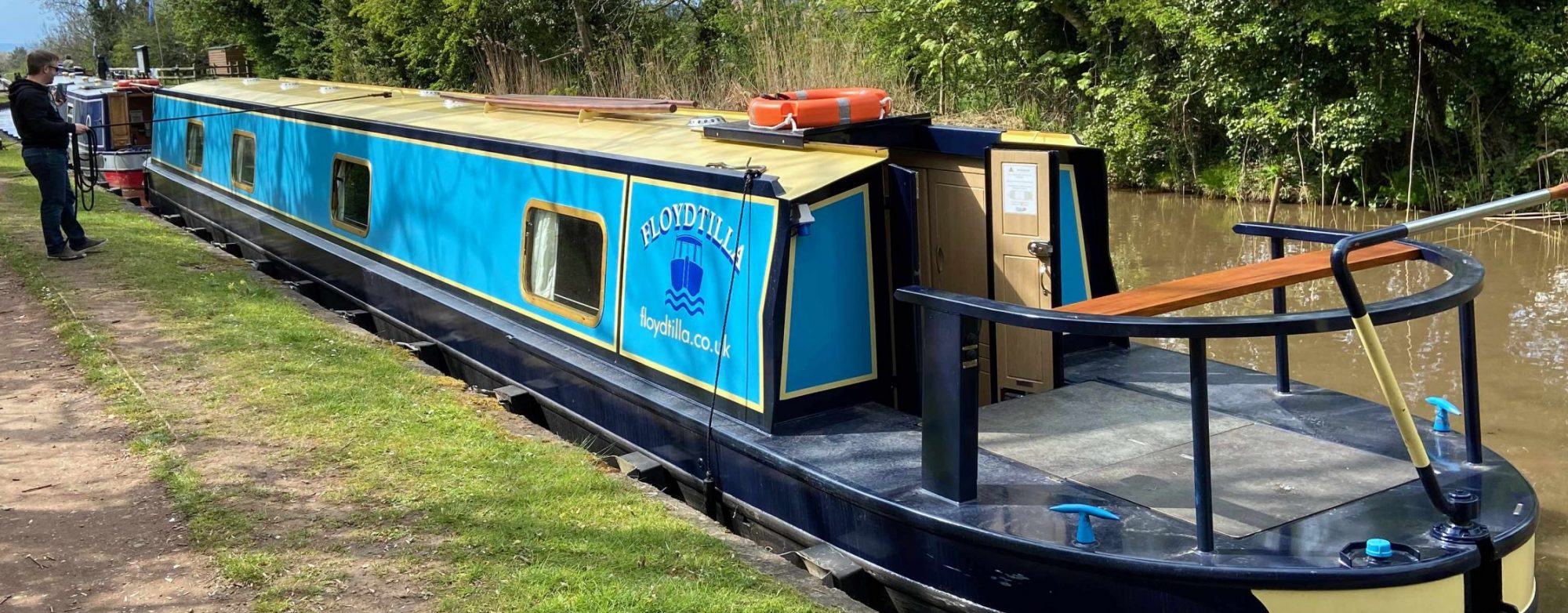

We already have a 3000W Sterling Pro Combi S inverter which was installed by Black Prince Boats when we purchased our Ex-Hire canal boat in 2021. Luckily for us Sterling Power Products are based in the UK and in Droitwich very near our Marina. They also have their Sales/Support and Stock on-site, very useful when you need to get a problem solved PDQ.
So after chatting to Ben at Sterling Power, he advised us what we needed and we placed an order online. The next day I went to collect our new goodies and have a further chat to Ben.
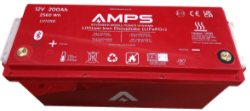 |  |
2 Off – LH12200 – 12V 200Ah LiFePO4 – Lithium Iron Phosphate Battery w/ Bluetooth
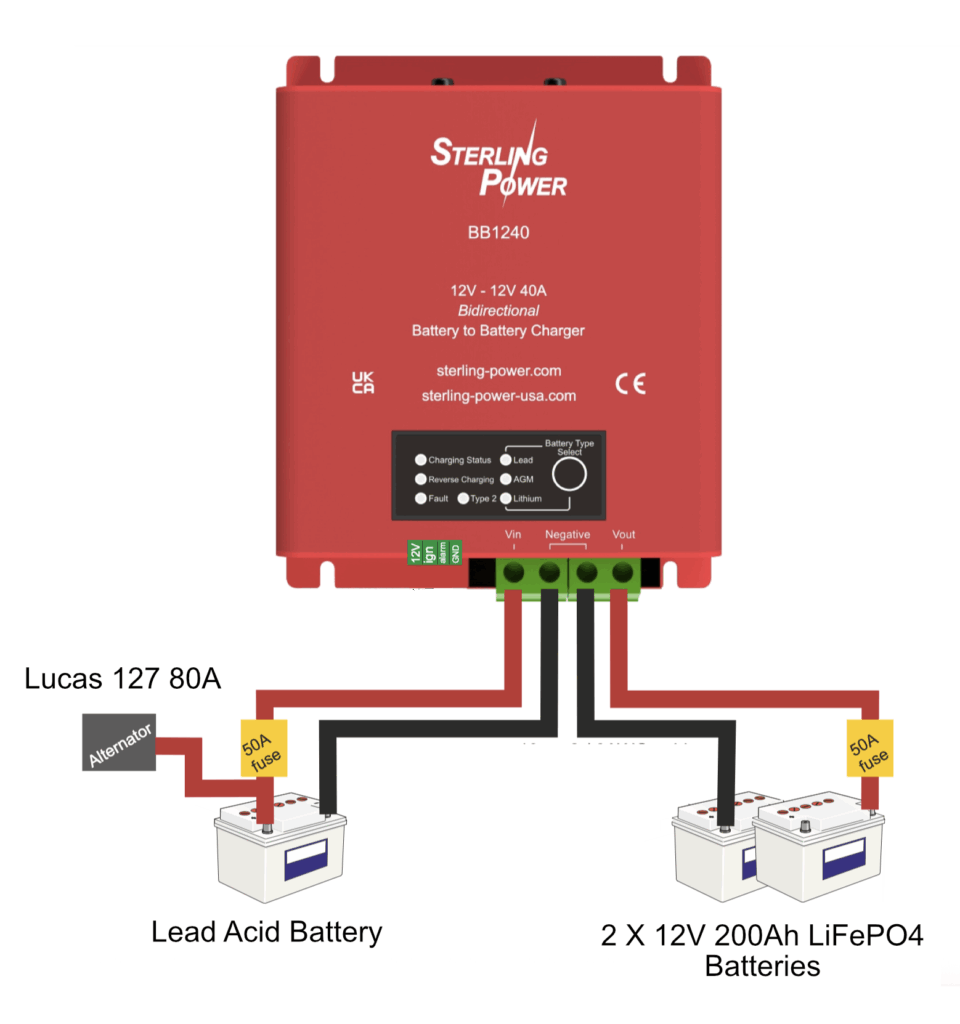
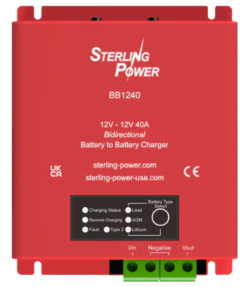
1 Off – Saturn BB1240 – 12V to 12V 40A Battery to Battery Charger
The Sterling is not the cheapest, I could easy find some low cost alternative products, but I was looking for a well know and reliable product that would be useable 24-7 & 365 days of the year, especially when the boat moored in a frozen canal in the middle of winter. The Sterling batteries include all the normal BMS (Battery Management System) stuff including a bluetooth connection to my phone, but I was also advised by Ben that these batteries also have an inbuilt 100W heater that is controlled by the BMS so that when the temperature is below 0°C it will divert any charging power to heating the battery first so it can be safely charged without damaging the battery.
Click for Explanation – LiFePO4 batteries and the COLD
LiFePO4 (Lithium Iron Phosphate) batteries should not be charged below 0°C (32°F) because lithium plating can occur, causing permanent damage, capacity loss, and increased safety risks such as internal short circuits. This chemical process, where metallic lithium accumulates on the anode, reduces the battery’s lifespan and can lead to dangerous failures.
Once back at the boat and with the excellent help of Steve Cowham from STC Marine Engineering, who is also based at Droitwich we started to talk through what we needed to do. The only sure thing was this was the first time either of us had done this before, but we had access to support from Ben at Sterling Power Products, available at the end of the phone.
A bit of a sudden panic on my part, as I had assumed this would all fit in the available space in the battery tray, something I should have checked first….
Luckily it all physically fitted.
Our plan was to have a hybrid battery systems retaining one of the old leisure lead acid batteries to act as a buffer between the Lucas 75 Alternator and the new fancy LifePO4 batteries, as Alternators and LiFePO4 batteries do not play well.
Click for Explanation – LiFePO4 Batteries and Alternators – WHY not a good idea
The use of the Sterling Power BB1240 between a lead-acid and a LiFePO4 battery is to provide the correct, multi-stage charging profile for the LiFePO4 battery, as it has different charging voltage and current requirements than the lead-acid battery.
A simple direct connection to the alternator would cause damage to the alternator. LiFePO4 batteries have low internal resistance and can draw a massive amount of current from the alternator, potentially overheating and then failing. The alternator is not typically designed to operate at full output continuously.
So, out with three old and tired lead acid batteries. We then put the LiFePO4 batteries sandwiched between the remaining lead acid buffer battery and the engine starter battery, which has its own alternator and is not effected by this upgrade.
While Steve was manhandling the batteries I was despatched to our local chandlery at Hanbury Wharf to get some longer M8 bolts as those supplied are a little short if you are connecting a few things to the terminals.
A question we asked Ben at Sterling was, “Where do we attach the solar charger, should this be on the lead acid buffer battery or on the LiFePo4 battery?” He came back with, “Direct to the LiFePO4 batteries as this does not need to pass through the Battery to Battery Charger”.
We have used most of the original cables to install these batteries. Unfortunately our cables would not let us connect the inverter directly to the LiFePO4 batteries, this was a problem as any power would not come from the LiFePO4 bank as while the Saturn BB1240 Battery to Battery Charger was bidirectional, it only charges the buffer battery when the LiFePO4 batteries are fully charged.
So for today we were as far as we could go. I later plugged us into the shore line power and, while not totally unexpected, the inverter kicked in and started charging the LiFePO4 bank via the Saturn BB1240 Battery to Battery Charger. I do not think I have heard the fan on the inverter run so fast, a few hours later we had charged the new batteries to 100%.
Now to connect the inverter directly to the new batteries we needed some extra longer 50mm2 cables, we also added a new isolation switch as we would now effectively need to be able to isolate the buffer battery from the Alternator. Another trip to Hanbury Wharf Chandlery and I had another isolator, luckily we have a ready made location for this next to the battery bank.
Steve had a very useful hydraulic crimp press and we trawled the Hanbury Wharf Chandlery collection of crimps as we adapted the cables we had to the correct sizes for the old lead acid batteries which had 10mm posts and the new LiFePO4 batteries that use 8mm and our fuse boxes that use 6mm
Steve also made a new cable for the Alternator as we expect to upgrade this later, and it only had a 10mm2 cable, as an over kill and as we had the cable to hand this was replaced with a 25mm2 which should give us enough capacity for future upgrades.
We added 50A fuses on the positive cable on the input and output cables from the Saturn BB1240 Battery to Battery Charger.
Now we have everything in working order, I will replace some of the old cables we used with some new ones of the optimal length and maybe add a couple of bus bars to make the wiring simpler, but that will be after our return from our September travels.
Note: I will include a simple wiring diagram in the next few days, once we are above the Tardebigge Lock Flight and I am moored in Birmingham.