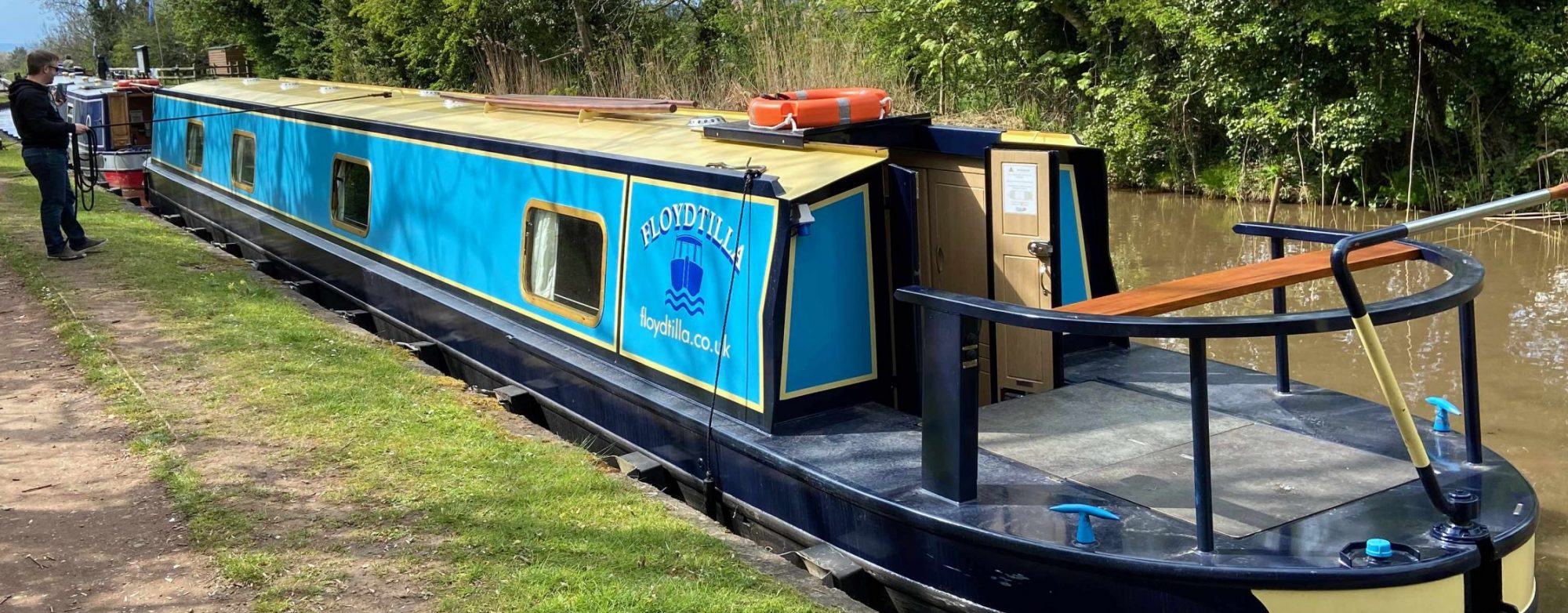

Day 15 of our 2026 Adventure – Boat Repairs

Another early start, but this time as I had to get into Nantwich and meet the DPD courier who was bringing my new alternator from the loverly people at Auto Electrical Supplies. I had asked them to send the parcel to the DPD pickup/drop off point which happened to be in the postoffice.

I was unsure how this was going to work, so I decided to be early and see if I could catch the van and make sure I got my parcel. I have used DPD for my own shipping in the past and have always been impressed by the service, the DPD App gave me an expected delivery time, the name of the driver and how many deliveries before mine would arrive.

Luckily I got into the centre of town well before he arrived with enough time to pick up a takeaway coffee from Nero. I then found the Postoffice and waited. Not long after a DPD van pulled up. I check with the driver, who was happy to give me my parcel, but he could only deliver things in the correct order, so he dropped off a couple of parcels, then returned to the van, he then scanned my parcel and handed it over, All very efficient.

I returned to Nero for a second coffee and by this time Sonia was walking into town with Obi and she found me outside Nero. We then walked to a dog friendly coffee shop called Charlie & Co, in Church Walk.

Nantwich - Charlie and Co Pupchinno
Nantwich – Charlie and Co Pupchinno

Obi enjoyed his Puppachinno which was free with our drinks. Nantwich seems to be a very dog friendly place, on the walk into town most of the people I saw were walking dogs, lots of the shops had dog water bowls outside that were well stocked, Obi tried a few.

We then walked around the town, Sonia found a wool shop with some things she could not resist, we also walked through the Nantwich market.

Nantwich Market - Open Tues, Thurs & Sat
Nantwich Market – Open Tues, Thurs & Sat

From here we decided to walk to the Railway Station and then back to the boat so Sonia would have a better chance of finding the station tomorrow.

Nantwich Millennium Clock

On our way to the Station, we walked past an entrance to alley of shops, in which we found the Nantwich Millennium Clock in a glass case, this town is full of little surprises. Back on the route to the Station and we passed the Nantwich Museum, which I hope to visit tomorrow while Sonia is at the Festival of Quilts at the NEC (But that will depend on how hot the day is as I would have to leave Obi on the boat).

Nantwich Community Orchard

We found the Station and then headed back to the boat, passing the Community Orchard, where Sonia examined and picked a few apples.

Obi drinks and Cools off in the River Weaver

Obi while you would expect him to love water, generally he drinks it, but does not bathe in it, this time as we walked across a bridge over the River Weaver, he ran ahead and into the river, I suspect for a drink and to cool off.

We are now not far from the boat and I will be glad to put down my parcel, alternators are not heavy unless to have to lug one about.
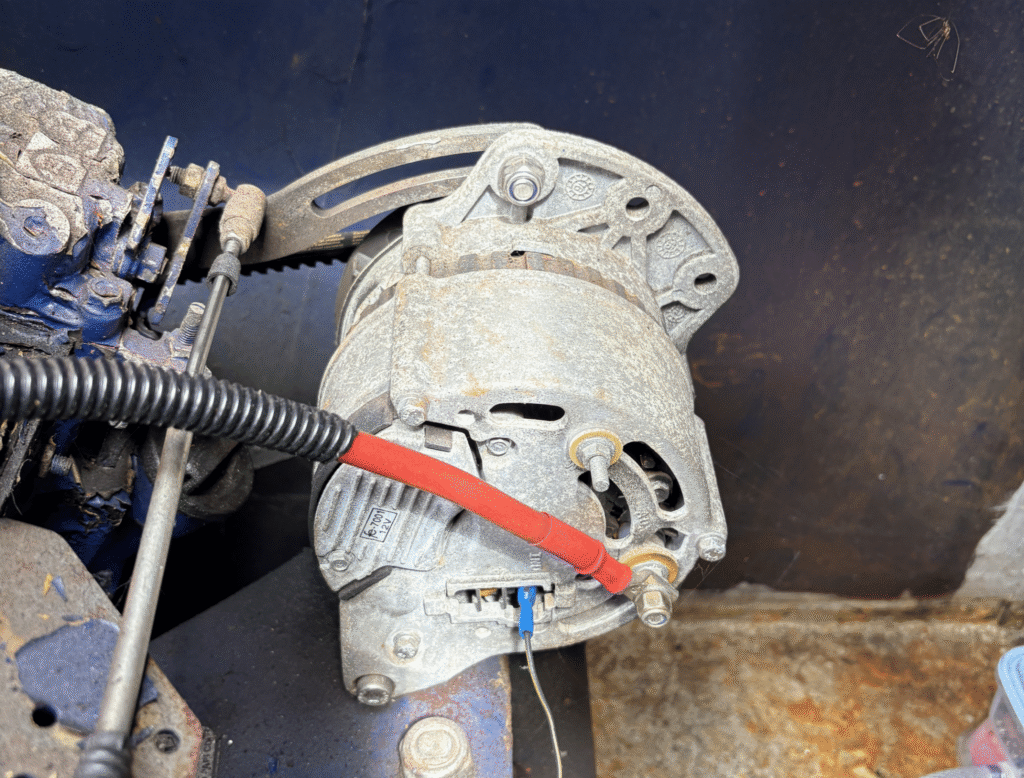
The old alternator good to take a picture to check the wiring

It did not take long to change the alternator I had made sure I had all the tools to hand and having isolated the batteries and check for any volts on the exposed wires off it came.
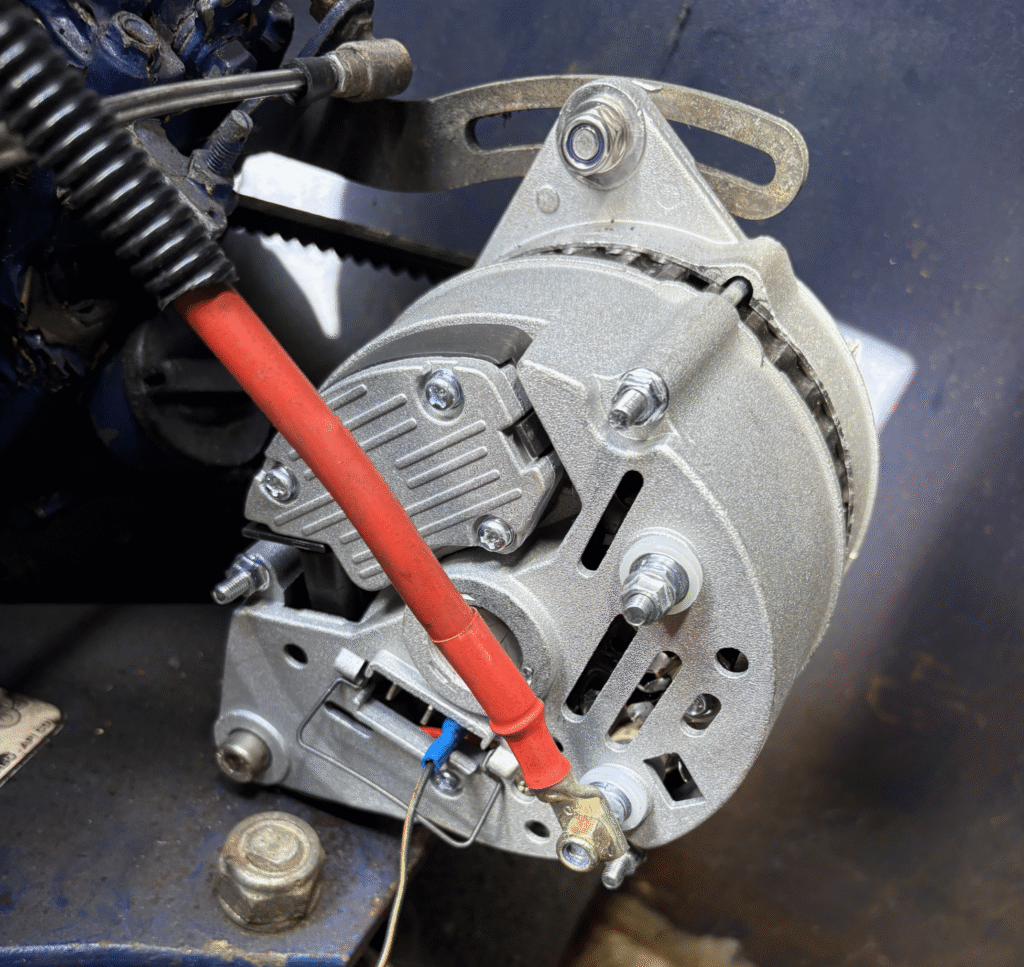
The new alternator fitted and ready to test.

Collecting the tools and opening up the engine hatch probably took longer than switching out and replacing the alternator, I switched back on the batteries, and started the engine. Unfortunately, by now, the solar panels had done their thing and the batteries were already at 98% SOC (State Of Charge), so the new alternator had little to do.

The odd thing is that our control panel for the engine has two alternator lights, one for each, and a buzzer if one fails. This, while still not at full blast, is still buzzing and one of the alternator lights was still dimly glowing.

With the batteries already charged, I will have to leave it till tomorrow morning when we have depleted them enough to see if the new alternator is working as expected.

Travel Stats so far – Today we are still moored at just after Marsh Lane Bridge No 91 very near Nantwich on the Shropshire Union Canal have not moved the boat our total is still 72 ¼ miles and 98 locks, no tunnels today so that’s stays at 7 for the our first 15 days.

Day 13 of our 2026 Adventure – Market Drayton and beyond

An early start today as we wanted to get moving and I needed to fit a new circuit breaker for the solar system and a new SFL-110 lead acid battery as the buffer between the alternator and the lithium batteries.

By the time we woke up the batteries where at 45% SOC (State Of Charge) as our solar had been not really working for the past couple of days and our alternator used for the leisure batteries also seem to be having problems. We had not noticed the alternator problem as our solar was working so well.

Anyway by the time Sonia and Obi had returned from his poo walk, battery and circuit breaker had been installed and the solar was once again pumping out power. By the time we left the mooring at about 9:15 am we had already added 2% to the battery bank.

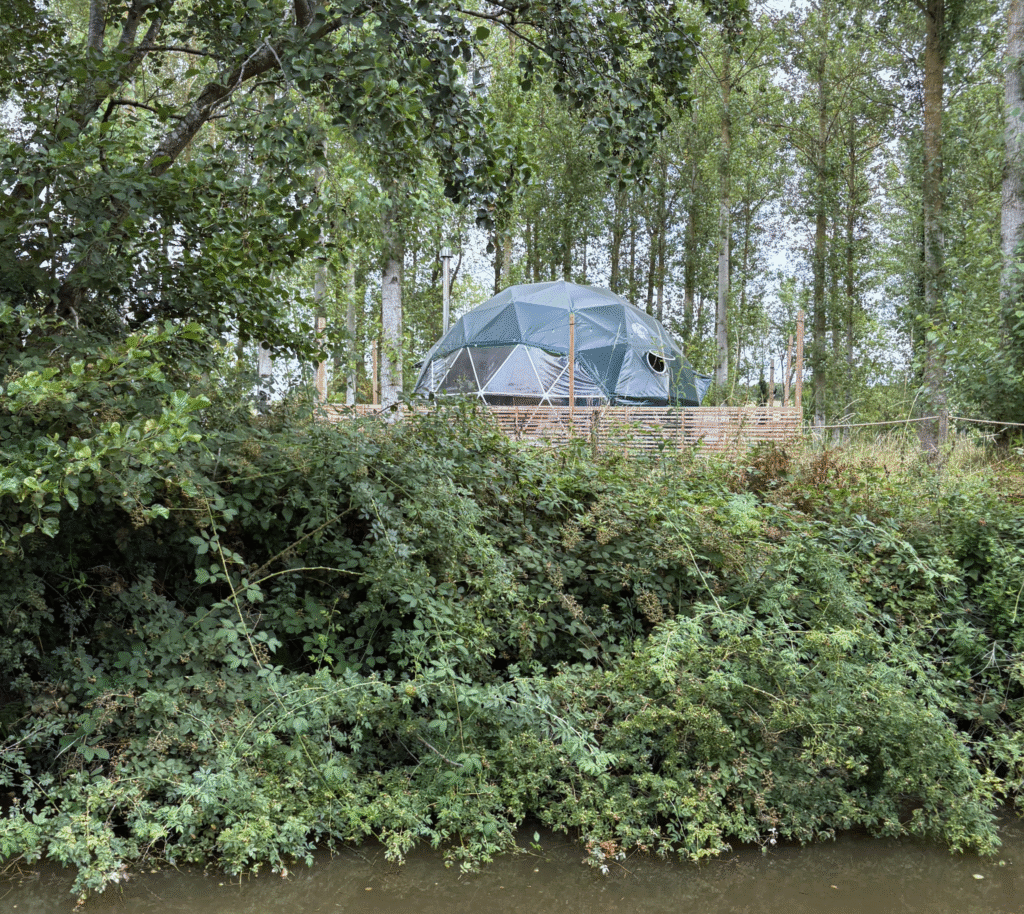
Geodesic Dome type structure

About 20 minutes into todays chug and to our right we can see some interesting looking Geodesic Dome type structures set in a wooded area by the canal, this looked fascinating and I am sure would be AirBnB’s or something similar.

Wharf Tavern and caravan park - Shropshire Union Canal
Wharf Tavern and caravan park – Shropshire Union Canal

Next we passed a The Wharf Tavern a Pub with its own Caravan and camp site attached at Goldstone Wharf.

Shropshire Union Canal - High Bridge No 57
Shropshire Union Canal – High Bridge No 57

Some parts of the Shropshire Union Canal are very narrow and it seems to be always where you meet other boats, but the bridges are spectacular, this is High Bridge No 57 and as you can see not much room for other boats.

Lock Houses at Tyrley Top Lock

Some very cool looking homes by the Tyrley Top Lock with some interesting signage on display, just before the lock was also a CRT water and refuse point, the other services like Elsan and pump-out have unfortunately been closed.

Lock House Signage
Lock House Signage

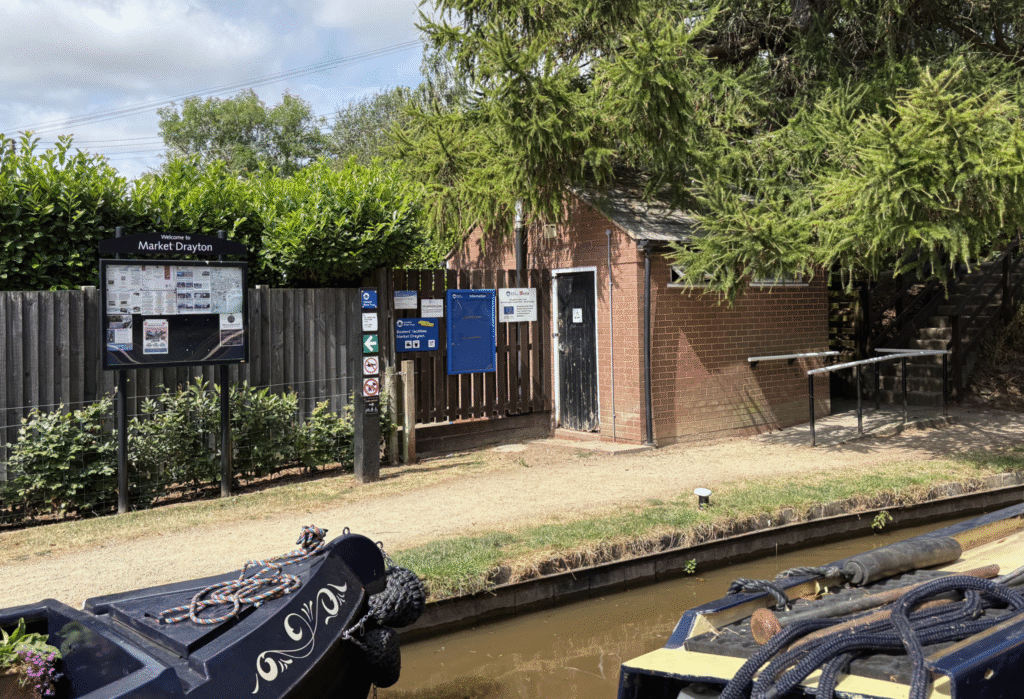
Next we passed Market Drayton, where we would have stopped for a few days if we did not have to get to Nantwich for Sonia to catch a train. In Market Drayton there are plenty of Visitor mooring and even a CRT Boaters Services block.

Market Drayton CRT Boater Services

Just before we pass through Market Drayton we pass some great looking herringbone long term moorings, you can moor short term on the 48h moorings on the towpath side.

Market Drayton Long Term Herringbone Moorings

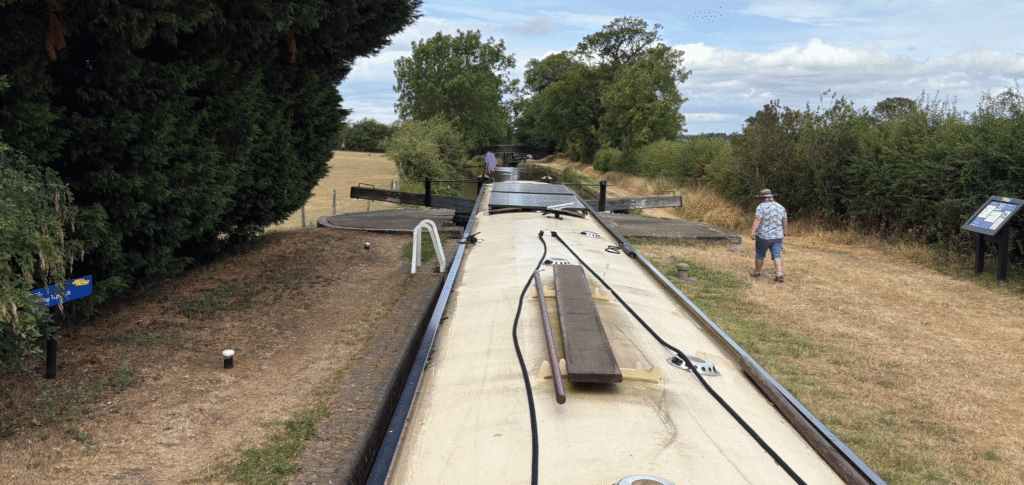
Next we have to complete the second set of 5 locks the Adderley Flight.

Shropshire Union Canal - Adderley Lock Flight
Shropshire Union Canal – Adderley Lock Flight

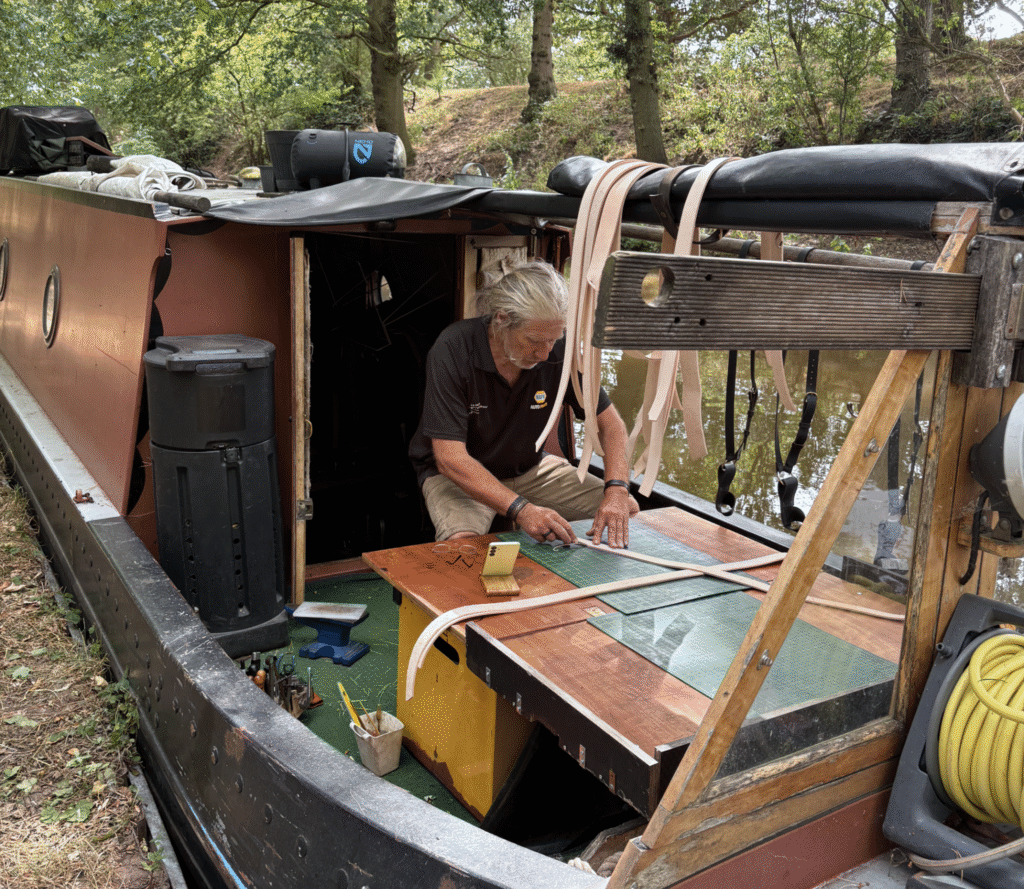
Having completed 10 locks today and we have in-front of us a flight of 15 locks and a couple more before we reach Nantwich we decide to moor for the day just after Spinks Bridge. Moored just ahead of us was Paul Lowry on The Leather Boat.

The Leather Boat - Working away on more belts and windless holders.
Paul Lowry on The Leather Boat – Working away on more belts and windless holders.

Travel Stats so far – Today we moored at just after Bridge 74 (Spinks Bridge) on the Shropshire Union Canal having chugged for again for about 8 ½ miles so our new total is now 66 ¾ miles and we added 10 locks today so our total grows to 81, no tunnels today so that’s stays at 7 for the our first 13 days.

Batteries and Battery Monitors Part 4 – Battery Monitor & The Shunt

Our Battery Monitor

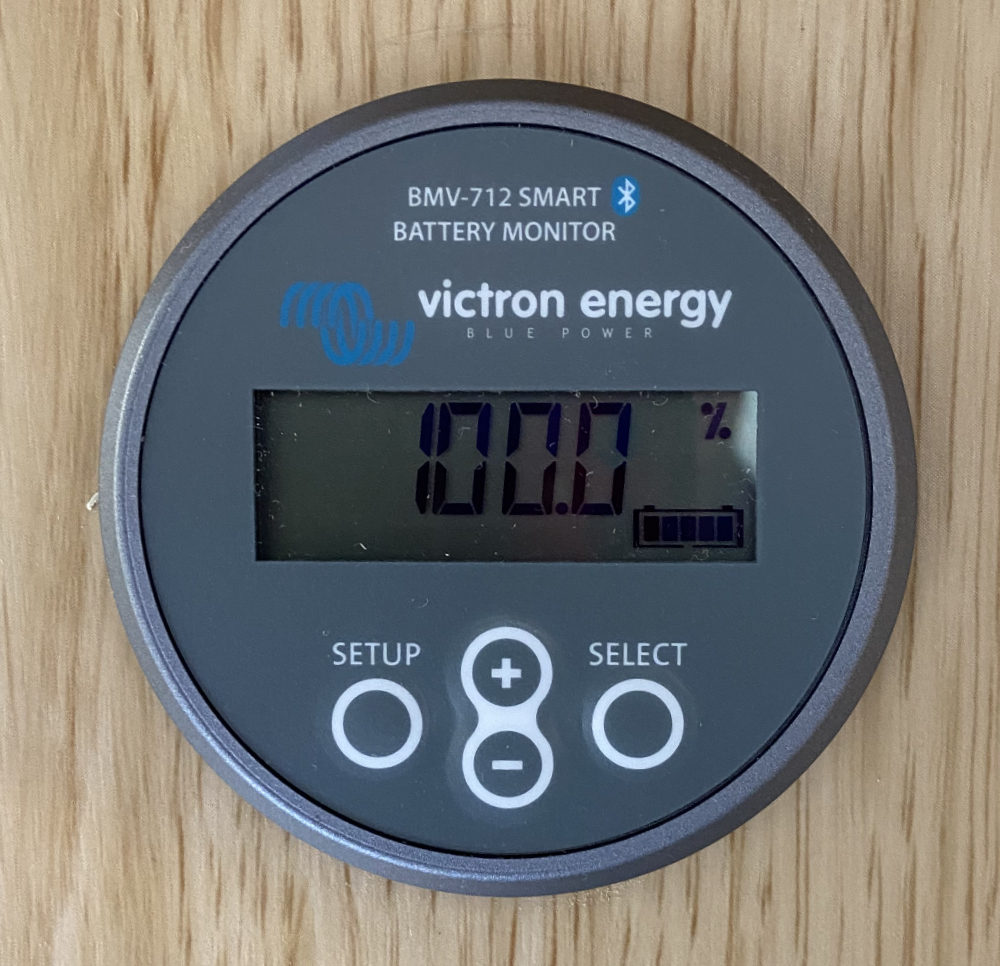
I have installed a Victron Energy BMV-712 Smart battery monitor, but there are many other options from other manufacturers, see the listing at the end of this article.

I selected this one as it gave me the opportunity to connect to my onboard Raspberry Pi which I am using to give some smart boat features and provide live location tracking for my website in the future.

Our Battery Monitor Display

The battery monitor comes in two parts, a display which provides a readout of the battery status and a means of programming/setting up the system for your configuration.

The Shunt

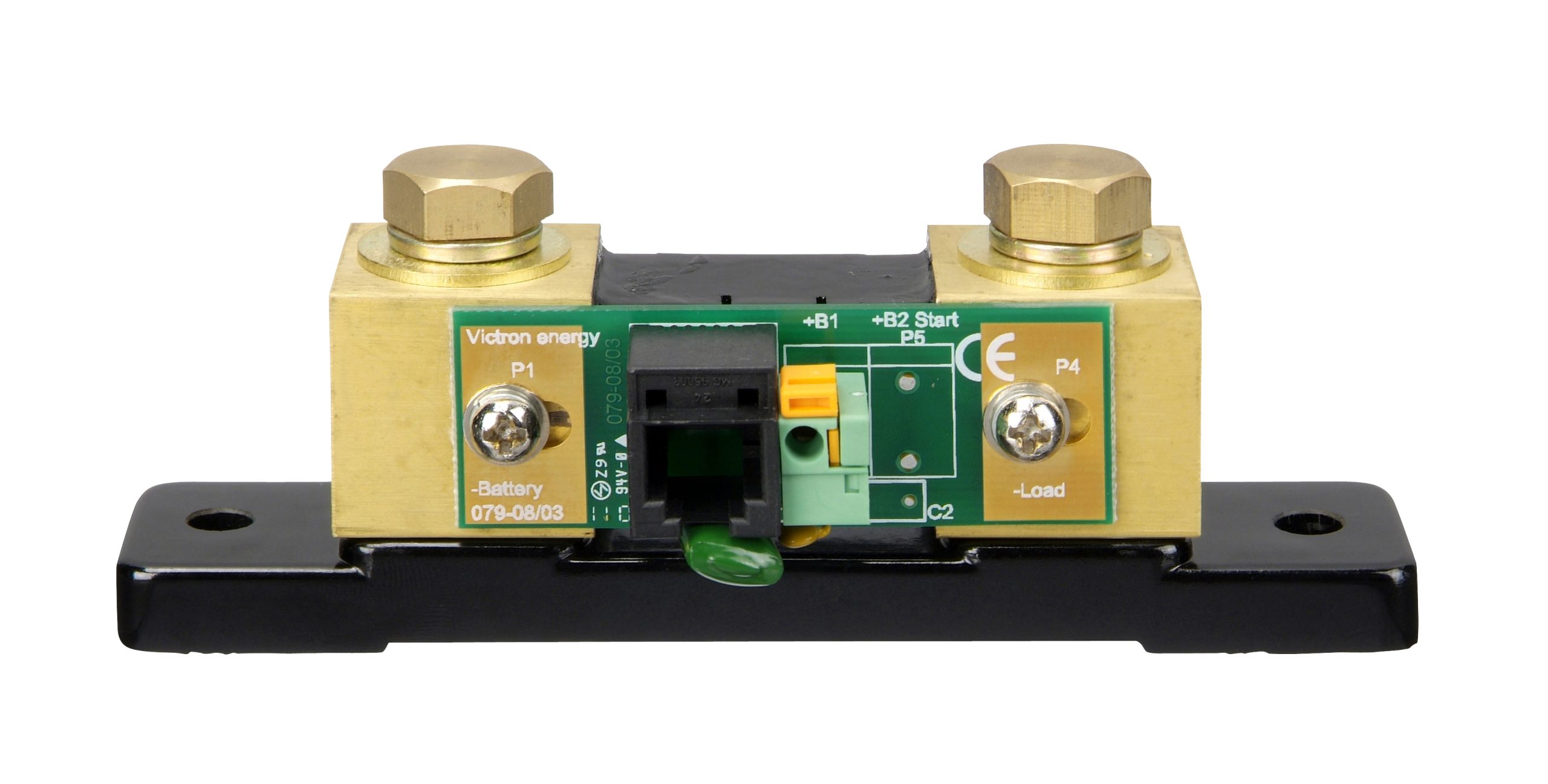
Victron Shunt
Victron Shunt (c)Victron

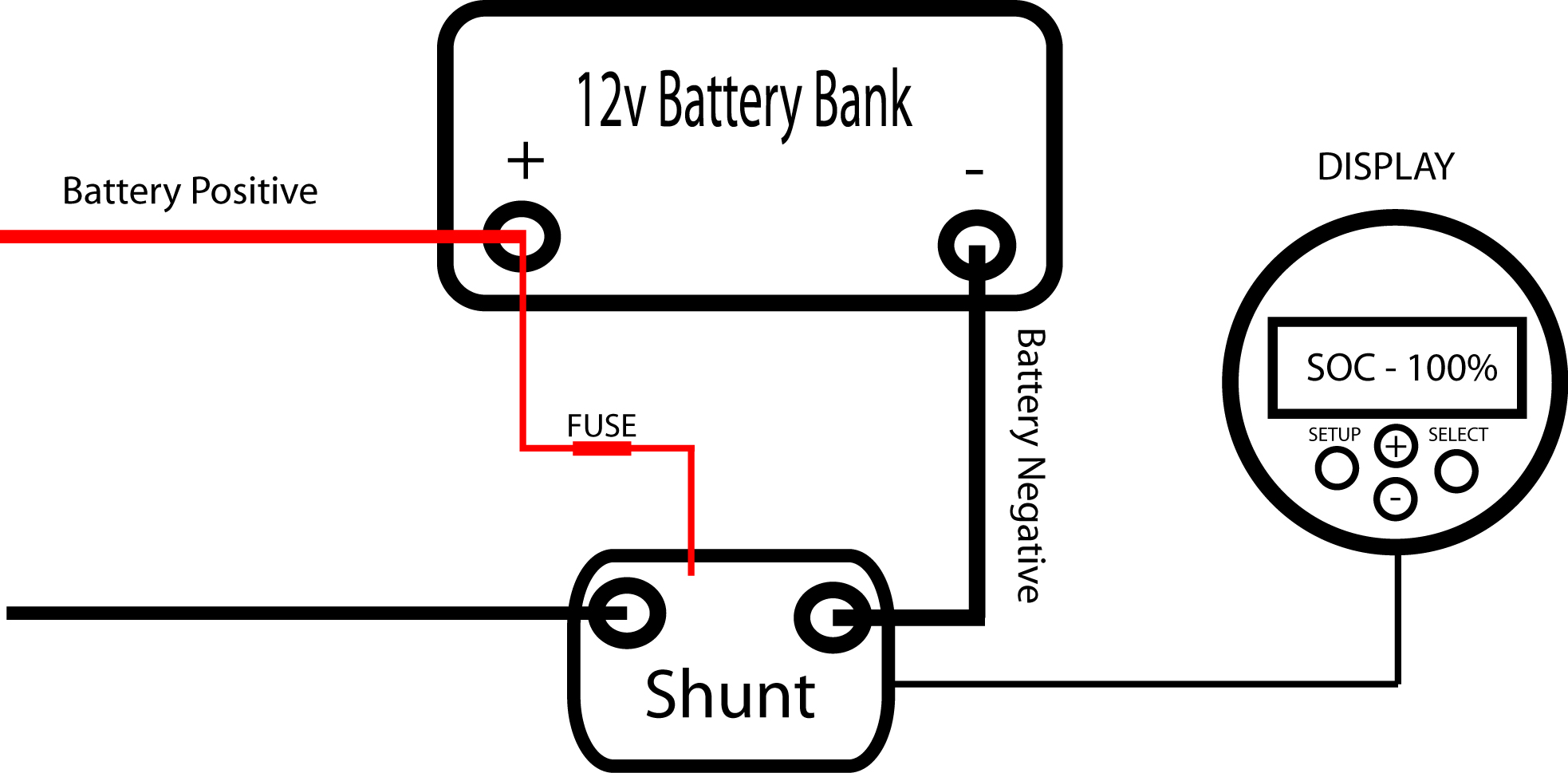
The second part is called a shunt, this needs to be placed, in our case, on the negative side of the battery bank, so that everything must pass through it to reach the battery, there should be no other connections to the negative side of the batteries else your measurements will never be accurate.

A shunt is a resistor of very low but known value that is placed in parallel with a voltmeter so that all the current being measured flows through it. The voltage drop across the shunt’s resistor is measured; this voltage drop across the shunt is proportional to the current flowing and can then be calculated using Ohms law (Current = Volts / Resistance).

Shunts are rated for the maximum current they can measure, in our case 500A which at 12V is 6000W, more than enough for our boat.

Basic Battery Monitor Wiring

The battery monitor also has an extra cable that connects to the positive side of the battery bank to power the electronics and the display, but also to measure the current battery voltage, we have an extra wire connected to the starter battery, so we can monitor its voltage as well.

Peukert’s Law

To then calculate the remaining capacity of the battery, the monitor uses an adaptation of Peukert’s Law** which can be used to calculate the capacity of lead acid batteries at different rates of discharge.  As we discussed earlier, the discharge rates affect the battery capacity.

** Developed by Wilhelm Peukert (1855-1932) Peukert’s law is used to calculate the batteries deliverable capacity at the current given rate of discharge, His law describes the batteries capacity at a constant discharge until it reaches its cut off voltage, below which you can damage your battery, this constant is called ‘K’, for example K=1.25 is used for our flooded lead acid batteries. There are however some limitations to this law as it does not consider the batteries temperature or age. I expect each monitor manufacturer modifies this to consider these extra factors when displaying the results, our system records each battery charge/discharge cycle.

The capacity of a battery falls at higher rates of discharge because the chemical reaction within the battery reaches its maximum speed for the given plate size and therefore the voltage drops. If left to recover, that missing capacity will return.

Using these calculations, a battery monitor can calculate the available power remaining while the battery is in use (under load) and as that load changes or even as the battery is charging, it can display the current State of Charge (SOC).

Now you know what is happening?

Armed with this information, you can then decide how you want to operate your boat and if you will need to start the engine to charge the batteries. One of our future projects is to work out the size we need for some solar panels, and we will use the data from the battery monitor to help calculate the size system we need, but that is a topic for another day

Battery Monitors Suppliers

Victron – www.victron.com
NASA Marine Instruments – www.nasamarine.com
Advanced Yacht Systems – www.advanceyacht.co.uk
Simarine – simarine.net/
Votronic – www.votronic.de

Safety Disclaimer

Batteries and Battery Monitors Part 3 – The State of Charge (SOC) Calculation

The State of Charge (SOC) Calculation Lead Acid batteries

Voltage only gives a rough estimate of State of Charge (SOC), the table below is just an example, the voltages can change significantly when the battery is under load, in most canal boat there is always something using the battery, our fridge while efficient is always on, so to measure this properly you need to have the battery disconnected  and allowed to rest for up to a couple of hours (Not always the simplest thing to arrange).

Capacity % Resting Voltage**
100% 12.70 V
90% 12.50 V
80% 12.42 V
70% 12.32 V
60% 12.20 V
50% 12.06 V

**Note: Example Only – typical lead acid battery. Best to check with your battery supplier if you use this method.

For your battery monitor to be effective you need to get the battery to a known state of charge to set a base/synchronisation point for future calculations. This is typically done when the battery is at 100% State of Charge (SOC).

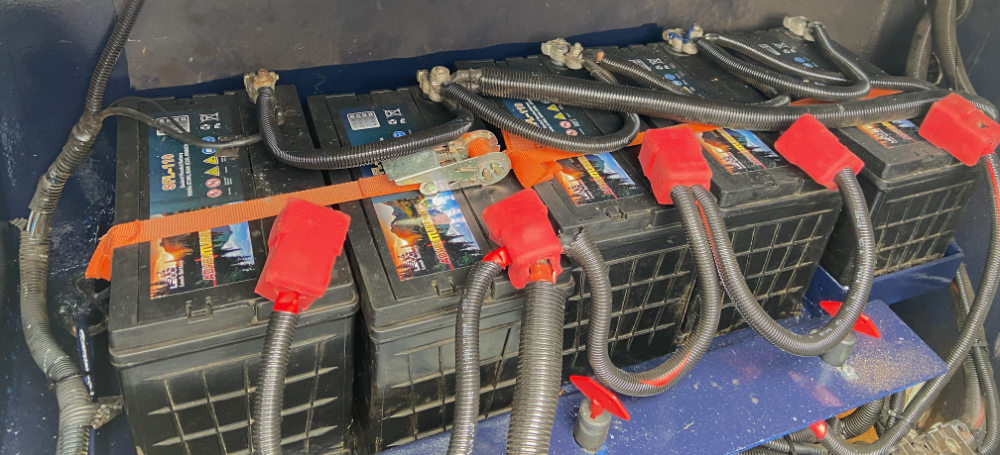
Original Battery Setup
Our Original Battery Setup

You can tell when a battery is fully charged by looking at the battery charger. When you charge a battery, the charger will start at its maximum current; this is known as the boost phase, during this, the voltage of the battery will increase to near the gassing voltage.

What is Gassing and why is it so bad

Gassing is basically very bad, as gassing mean that the current applied to the battery is not being used to transform the plates back to their fully charged state but is breaking the water down to Oxygen and Hydrogen, which is a highly explosive mixture, try to remember back to school science lessons and electrolysis.

A smart battery charger will monitor the batteries internal resistance so then when it reaches near 80-85% charged it will switch over to the next phase known as the absorption phase. The last 15-20% will take a lot longer for a battery to absorb. It was explained to me much like the seats in a cinema, when the cinema is empty it is easy to find a seat, but as the cinema fills up the available spaces are harder and harder to find and fill.

The Float Phase

Once charging is complete the charger will switch to the float phase, where the voltage is kept at a point to maintain the battery capacity, this is often referred to as trickle charging.

State of Charge (SOC)

With the battery now at 100% charged, we have our known State of Charge (SOC). A battery monitor can use this to calculate what usable power is available while monitoring further charging and usage of the battery.

Safety Disclaimer

Batteries and Battery Monitors Part 1 – Why we needed one

In this multi part post we are going to look at why you need a battery monitor in the first place, the alternative types of batteries available and then how they are rated for capacity.  It is then useful to know how your battery charger works before rounding up by looking at what a battery monitor can calculate for you.

Our Battery Monitor
Our Battery Monitor

Having been electric car users for a number of years we understand how careful use of our batteries can extend our range. It still came as a surprise to us when we hired a boat and the lights would go out quite early if we stayed for a couple of days without running the engine. Hire boats are designed to be used, they have just enough battery capacity to do the job, they normally don’t include solar panels, or even a larger inverter.

Part of our upgrades and modification of our ex-hire boat, floydtilla.co.uk, was to add an additional leisure battery and upgrade the inverter to an 3500W inverter charger with a shoreline charger.

The batteries are one of the most expensive consumables on your canal boat, good management of them can increase their life by many years, and the best way of keeping them in good condition is to know how much power you have available.

Why voltage is not enough

When I started looking at battery monitors, it was suggested “Why bother all you need is a voltmeter to see your state of charge” and while mostly true, you can tell a lot from the battery voltage. The voltage will drop if you are using the battery, and most of us cannot be bothered to isolate the batteries before taking a reading.

A good battery monitor not only displays the current battery voltage, but it also displays the current in amps and the power in watts being used. This can be extremely useful when trying to find out how much power you are using and on what device. On the monitor we installed we also get a time remaining display which shows us in hour and minutes how long the battery will last at the current usage.

When battery size is not the FULL answer?

The biggest confusion with battery monitors and what causes the most misunderstanding is the State of Charge/Voltage displays. In use, a battery’s voltage will drop depending on the load it’s providing, and batteries do not really have a fixed capacity; it all depends on how you use them. Even when new, it is unlikely your 400Ah battery bank will give you a true 400Ah, and then will only degrade as they get older.

Your battery’s capacity will vary widely depending on how fast you discharge it. The slower you discharge the battery the higher its potential capacity and the faster you discharge it the lower its capacity.

We tend to leave the battery monitor on its “Time Remaining” display as this very quickly shows me if what I am doing will cause me a problem, and if I will need to run the engine before we move on.

Inverters eat your power

Inverters use quite a lot of energy converting your batteries 12V or 24V up to the 240v, most seem to be between 80-90% efficient, so that would mean that for 200w you are really consuming up to 240W. Inverters become more efficient when they reach over approximately 30% of their capacity, so best not to use them to just power your mains phone charger.

Monitoring what’s using your battery

The battery monitor we fitted has a Bluetooth connection to a smartphone (currently both Apple and Android apps are available). Using this, I captured some screenshots showing the battery usage (Click on the image to enlarge).

Fridge and Laptop usage Inverter Switched On Vacuum Cleaner
Just the Fridge and Laptop Inverter switched on Vacuuming

When using our mains vacuum cleaner via our inverter from the battery bank, the monitor dropped to just under 2 hours left at that usage, but this soon returned to days after I had stopped cleaning. Even I would find it hard to hoover for 2 hours on our narrow boat.

Different battery technologies have different profiles when it comes to their capacities. Lead Acid batteries should only be discharged to 50%, else permanent damage can occur, so even when you have a battery that states 100Ah capacity, you may only have a usable 50Ah capacity, and this will drop as the battery ages.

Your Battery C-Rating

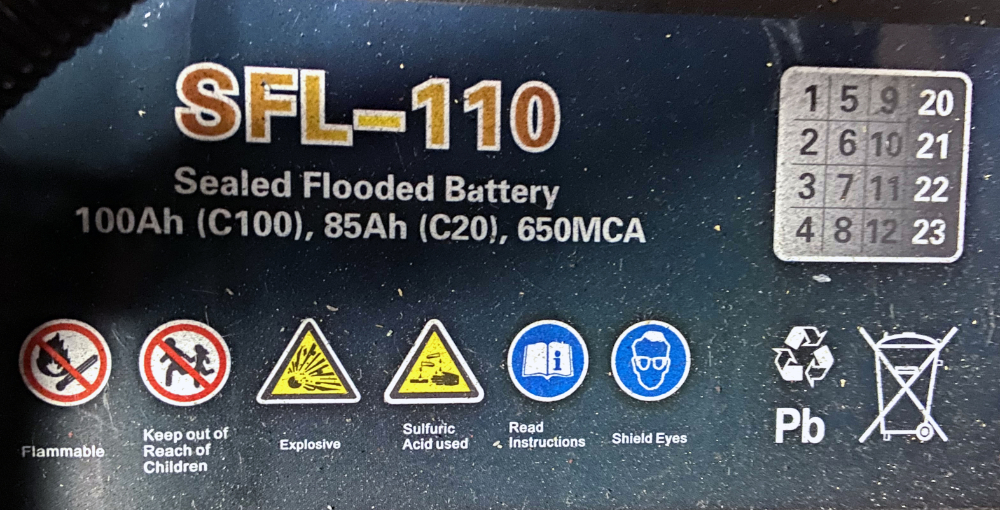
Batteries are often marked with a C rating which gives the number of hours that the battery is designed to deliver its fully capacity over. Our Leoch Adventurer SFL-110 batteries have two C rating marked for their capacity 100Ah C100 and 85Ah C20.

Battery C Rating
Battery C Rating

This means that the battery will provide 100Ah if discharged over 100 hours or just 85Ah if discharged over 20 hours.

e.g.

C20 85Ah The battery can discharge at a rate of 4.25 amp for 20 hours 4.25 X 20 = 85Ah
C100 100Ah The battery can discharge at a rate of 1 amp for 100 hours 1 X 100 = 100Ah

So far, we have been talking about Lead Acid Batteries, which are still the most common batteries found onboard and the most limited in terms of usable capacity.  In the next part of this series, we will look at the available battery options and their costs.

Safety Disclaimer